
Categories
Uncategorized

Yesterday’s news – Double white blossoms

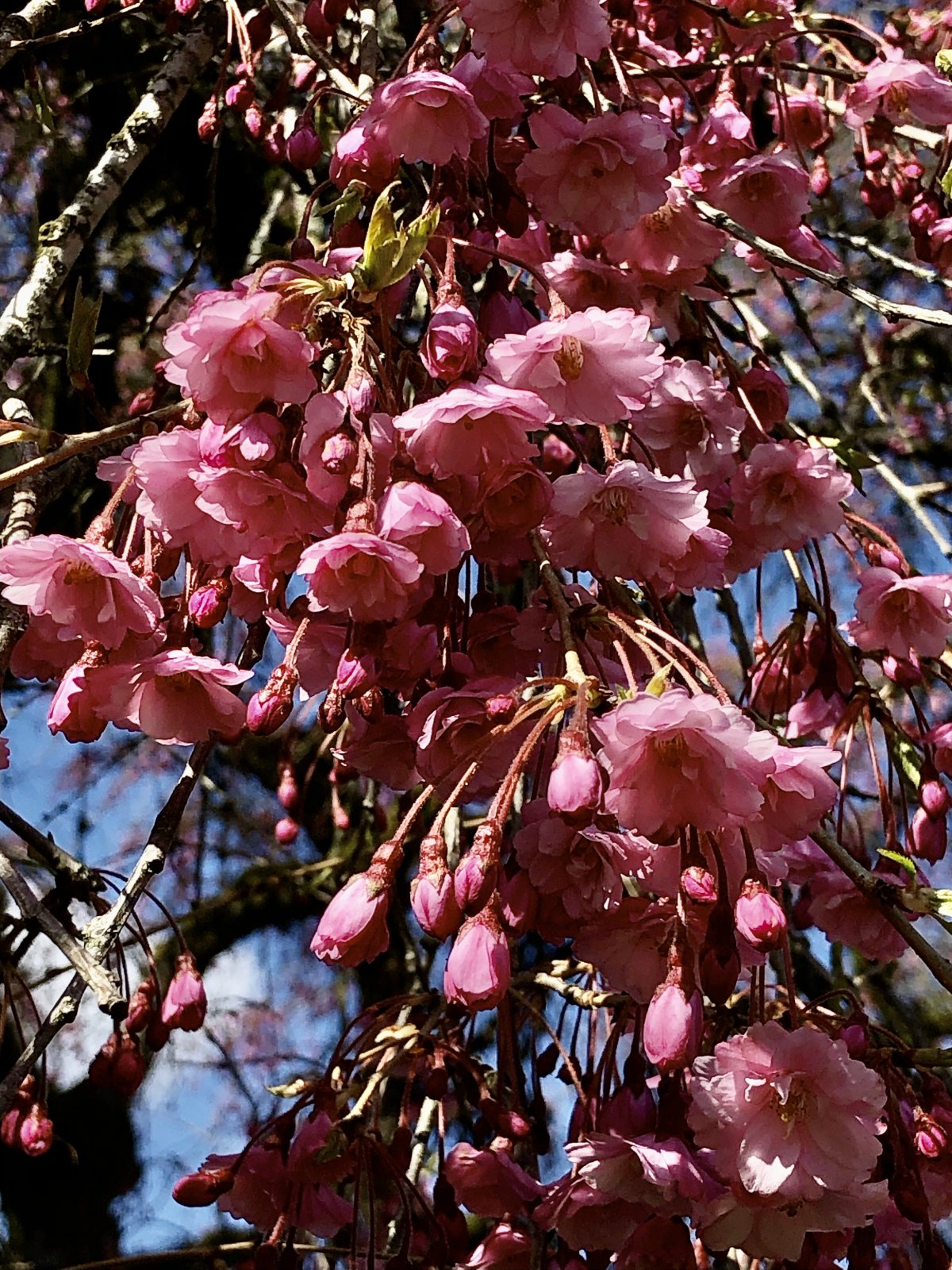
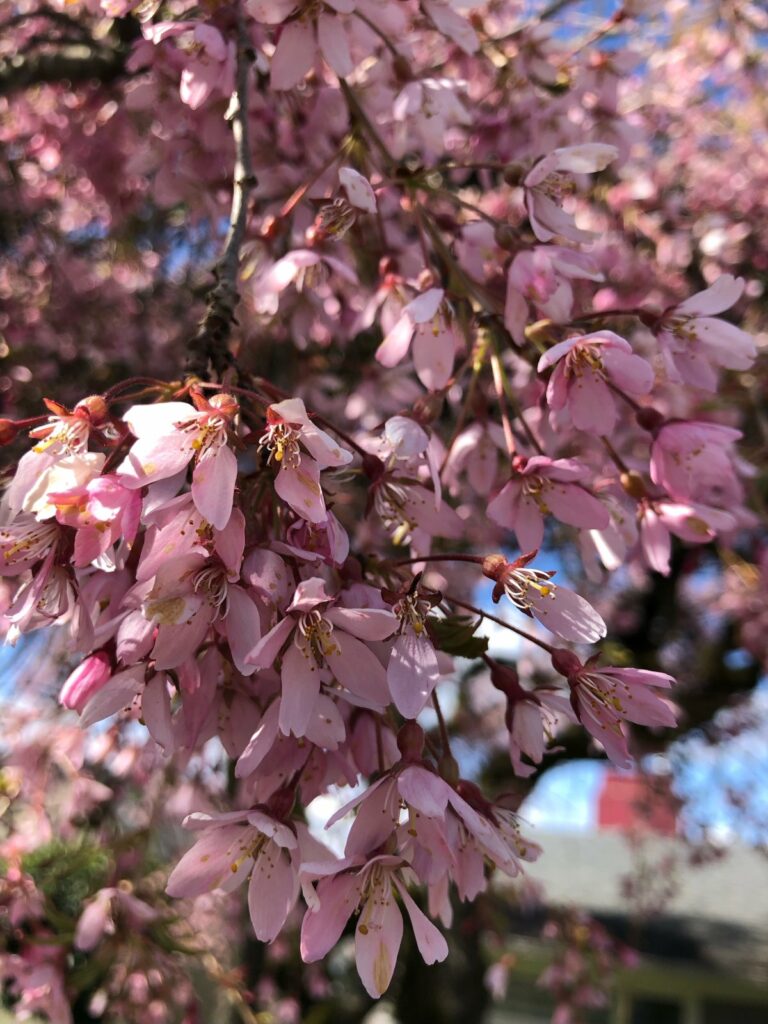
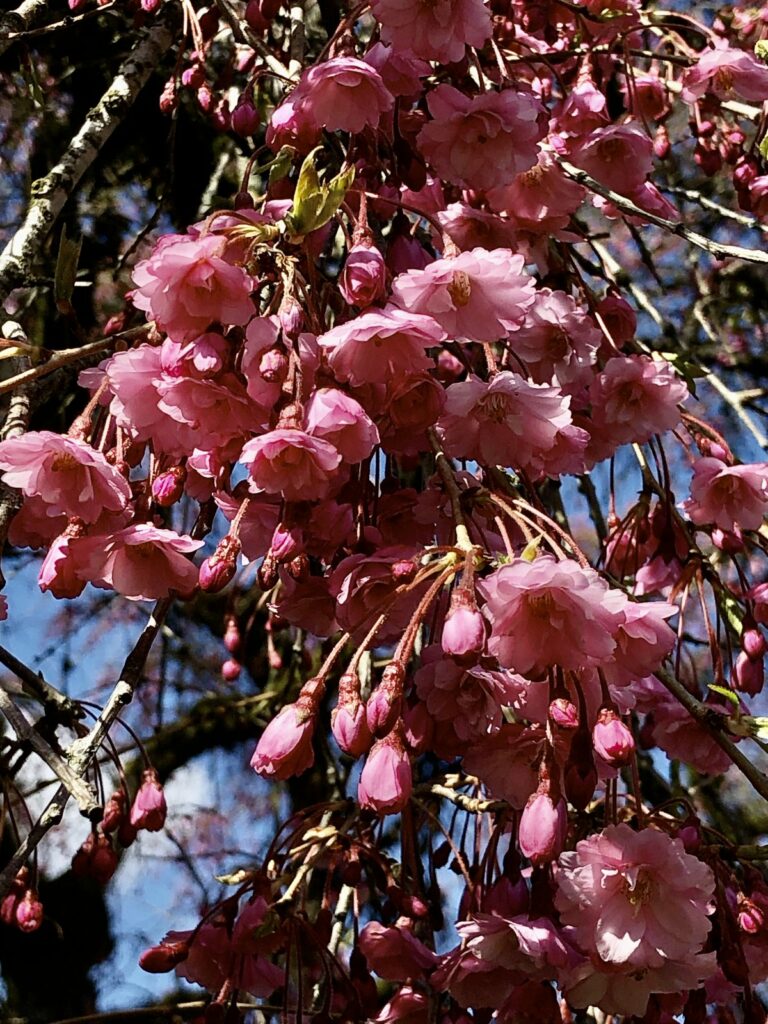
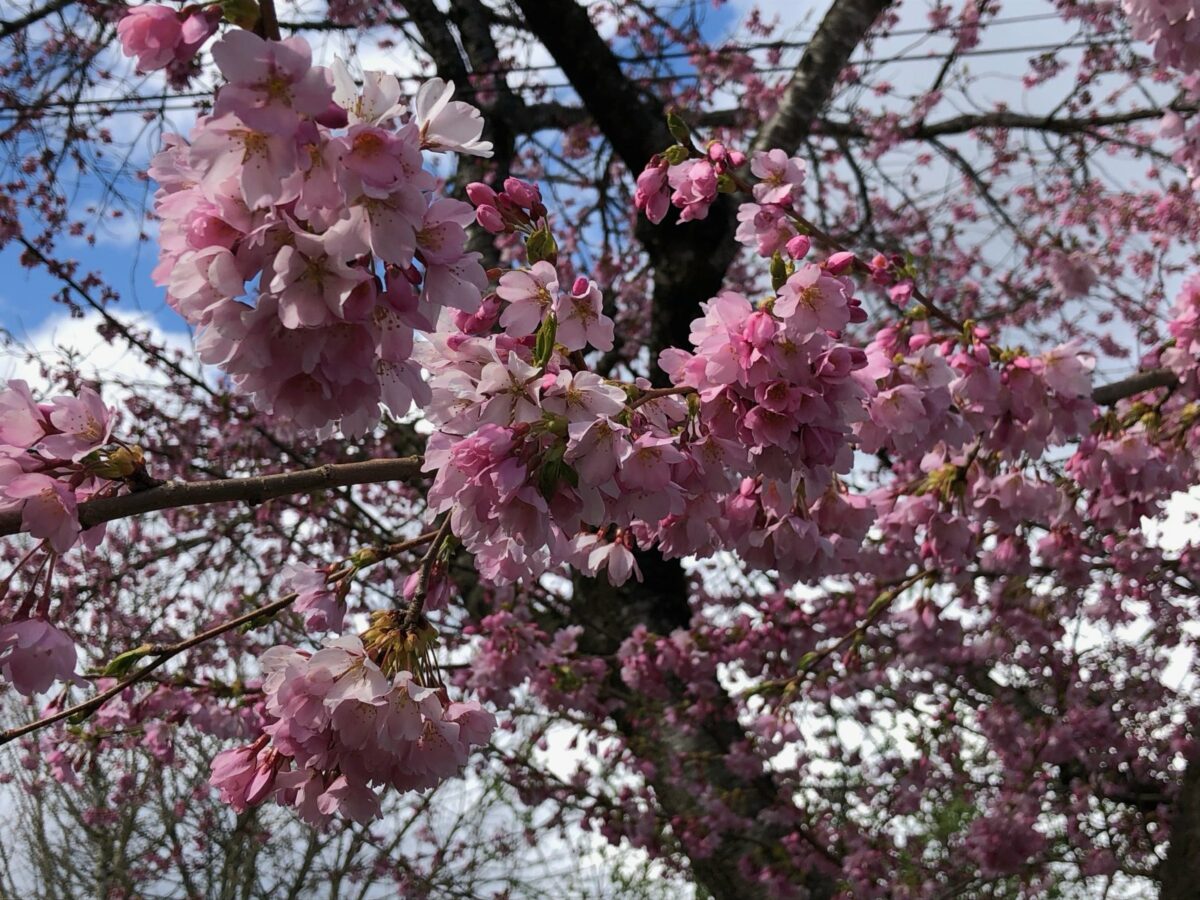
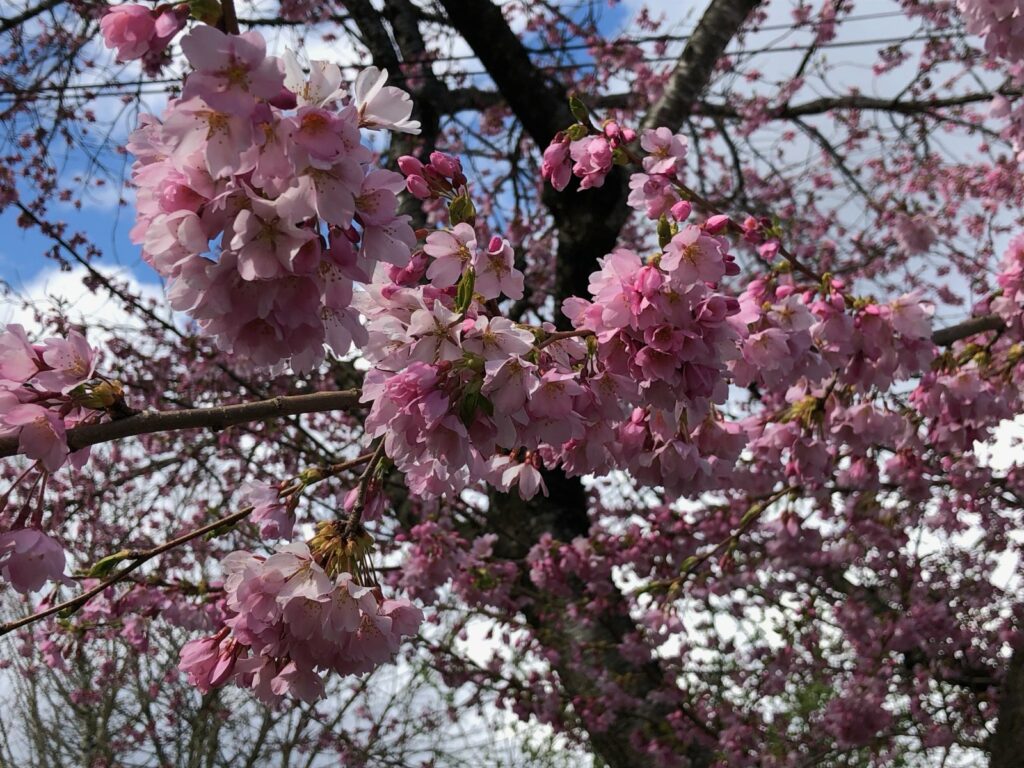
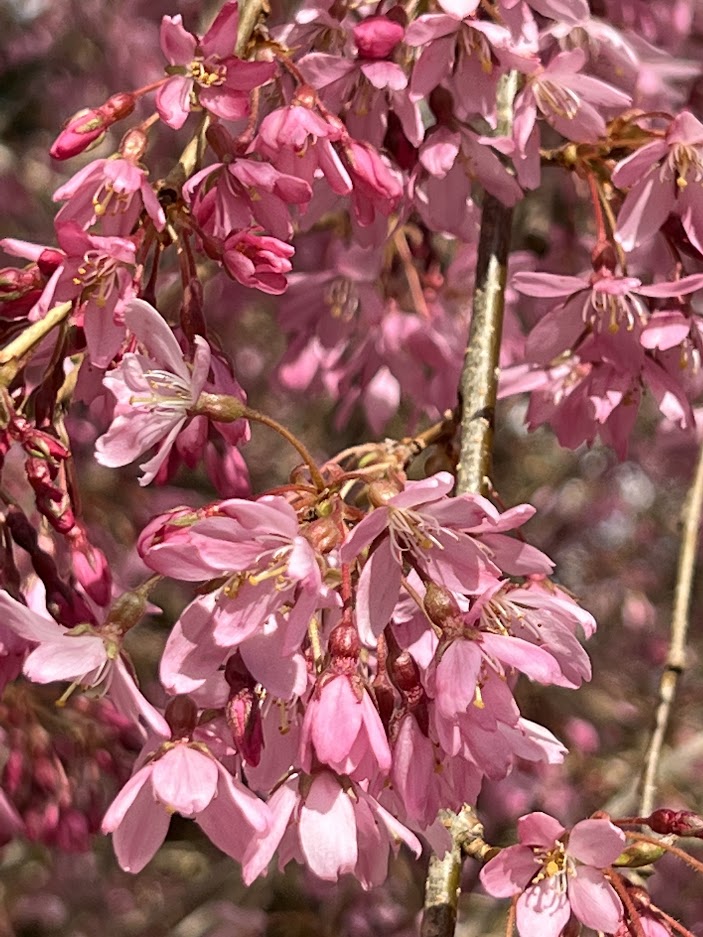
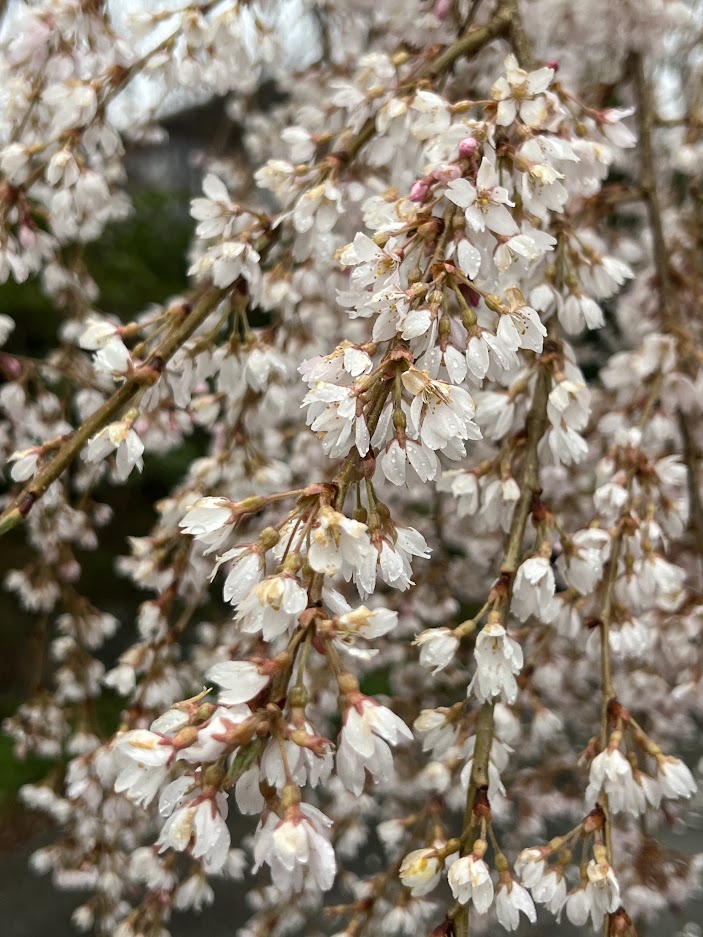
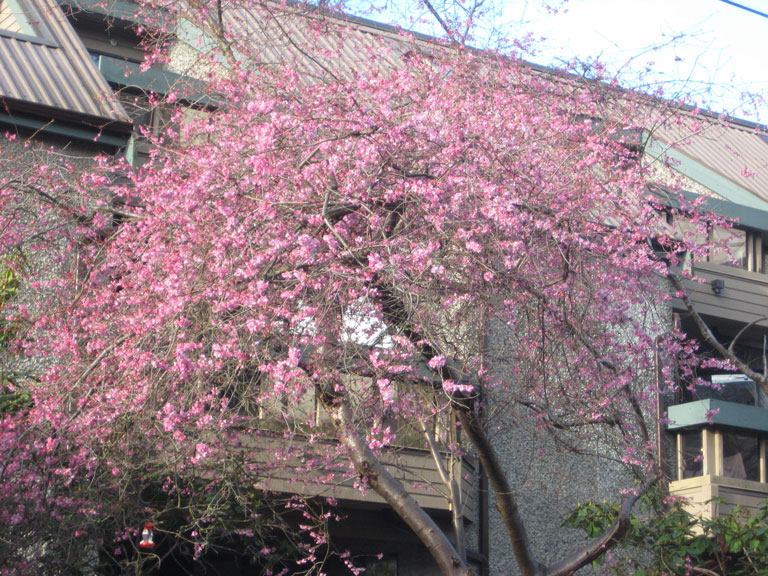
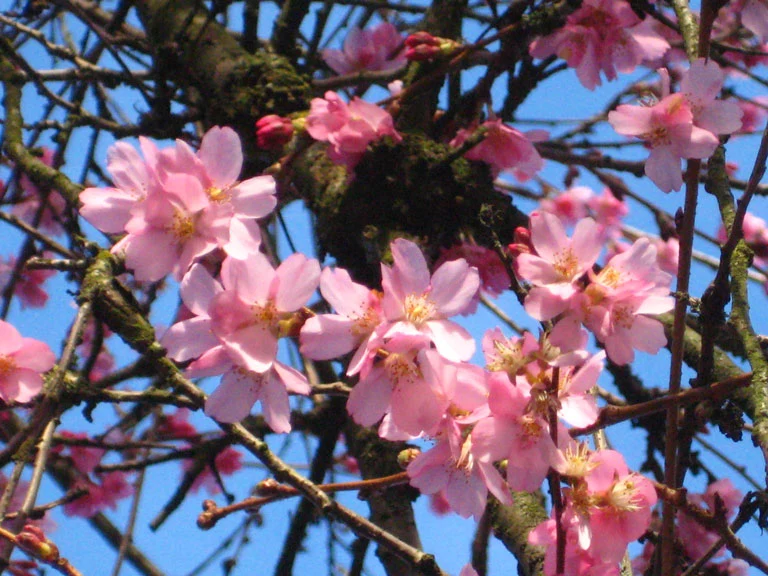
April 4, 2026 Mid-season blooms are opening quickly now. ‘Akebono’ are still looking good in most of the area, but two cultivars with double flowers are bringing joy this weekend. ‘Shirotae’ are often beautiful wide-spreading trees, and they can grow quite large. Their leaves start to open with the flowers, giving the trees an over-all warmer colour. ‘Takasago’ are small goblet-shaped trees, often sickly-looking and not particularly attractive, but the pinky-white flowers, when they first open set against the dark pink buds, are extremely beautiful. Thanks to Cherry Scouts Anne Eng and Tao Yan for the photos.
0260402_Shirotae_KingEdWindsor_Eng_1805
Takasago_4949HeatherSt_Tao_20260331_IMG111831-edit wlc
Categories
Uncategorized

Yesterday’s news – ‘Kanzan’ snow

April 30, 2025  We started the year with snow on pink ‘Whitcomb’ cherry blossoms; we’ll end the cherry blooming with pink ‘Kanzan’ snow on the sidewalks, evoking Mono no aware, the traditional symbolism of cherry blossoms as a metaphor for the ephemeral nature of life  Thanks to Cynna Bartram on Facebook for sharing her photos celebrating the closing out of our season.

Kanzan snow_KItsilano_CynnaBartram_20250430_7460271895103732536_n
Kanzan snow_KItsilano_CynnaBartram_20250430__4774290764430876665_n

Categories
Uncategorized

Yesterday’s news – Winter cherries – Autumnalis Rosea

December 15, 2024. These are winter cherries, ‘Autumnalis Rosea’, either the same or a very close relative to what the Japanese call ‘Jugatsu-zakura’, “cherry of the 10th month”. It is still 2024, but these are kicking off the new year. Thanks for Shirley Willard for the photo from Richmond, and Lisa Lennie for the one from Victoria. These blossoms are very small, no more than 2 cm in diameter, smaller than they appear here.

20241215 ParkwoodWay AutumnalisRosea Willard IMG_4332

Autumnalis_Belleville & Douglas St_llennie_20241206_135945
Categories
Uncategorized

Yesterday’s news – ‘Shiro-fugen’ and ‘Shogetsu’

April 19, 2024. Not all late-blooming cherries are pink. Here are two double white cherries that can look alike. ‘Shiro-fugen’ are easy to distinguish when the flowers are opening – at that point, the leaves are bronze, buds are a brownish pink, opened flowers are white. Two weeks later, and as much as another two weeks or more, the leaves will be green, and the flowers become partly or completely fluorescent pink.

Shiro-fugen_200aStMichaudCre_maylin_20240419_IMG_7112

However, one week into ‘Shiro-fugen’ flowering, they do not look all that different from the ‘Shogetsu’, seen below. ‘Shiro-fugen’ should be much heftier trees, but it’s hard to tell that on very young trees. ‘Shogetsu’ buds are a a very pale pink. The flowers also open white, and the petals mostly drop still white within two or three weeks. The name refers to the “moonlight on pine trees” suggested by the long flower stems. These are usually delicate trees that often do not do well in our climate.

20240419_Shogetsu_WalesKingsway_Eng_0359
Categories
Uncategorized

Yesterday’s news – single whites

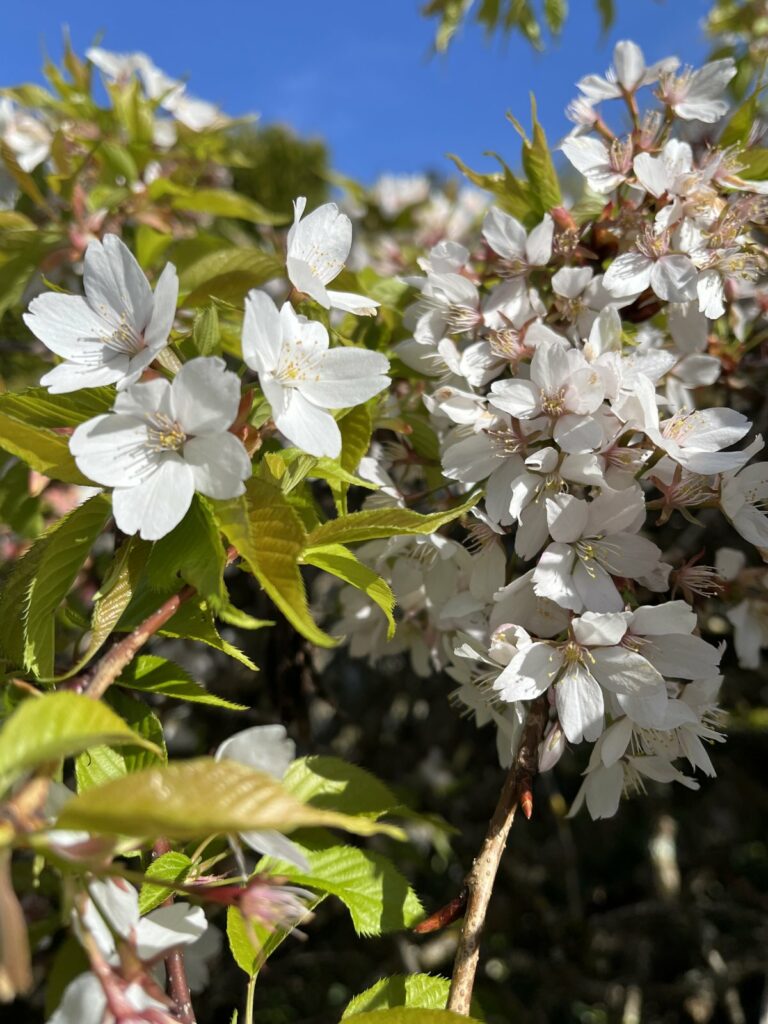
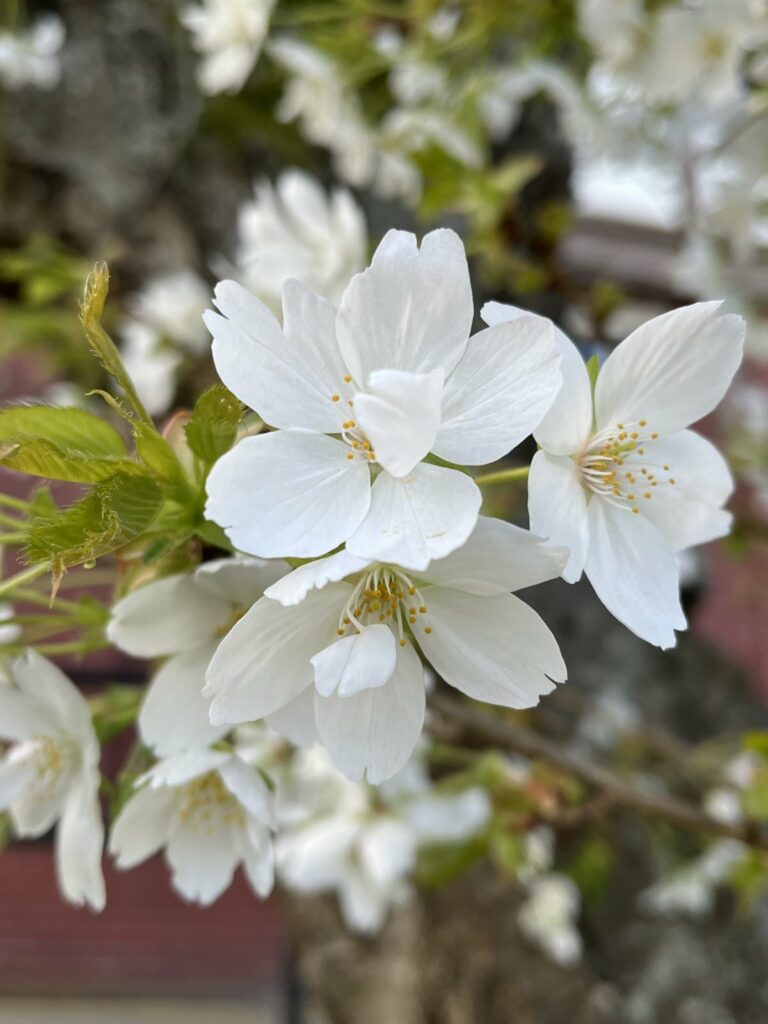
April 6, 2024. Still catching up here, with everything blooming at once – at least mid-season and late-season trees. Here are some single White flowers, all pretty rare in this area, with the top one just added. The ones with “nioi’ or “no-o” in their names are fragrant, a fairly unusual feature of cherry trees.

‘Sendai-shidare’ are easily distinguished from the others here – they are usually short dense pendulous trees with thick very contorted limbs.
20240404_Sendai_BalsamW22_Eng_0105

The wizened ‘Jo-nioi’, at the RCMP Headquarters property has sent up a new shoot. Here’s hoping the only other known example in Vancouver does the same. This looks similar to the ‘Washi-no-o’ featured just below, but it blooms later and the flowers are more likely to show the extra half-petals you can see in this photo.
20240404_Jo-nioi_RCMPHeatherW33_Eng_0127

‘Washi-no-o’ are fairly rare, but our Cherry Scouts have found ten locations in the area. The name means “eagle’s tail”, suggestive of the ruffled petal edges.
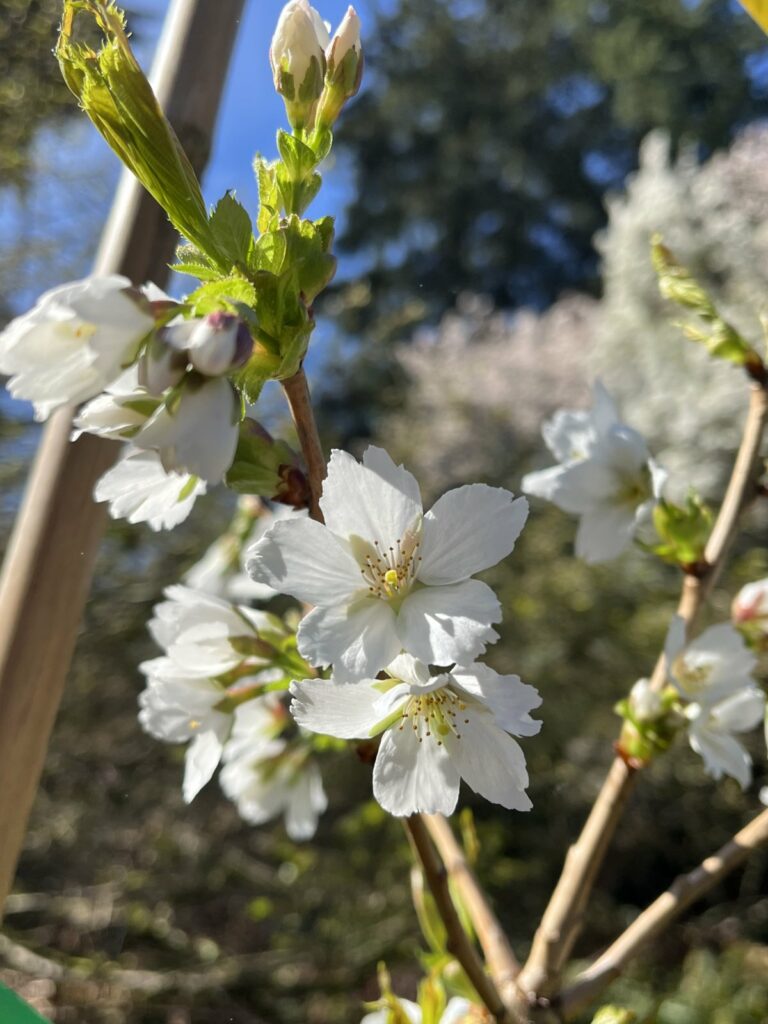
20240331_Washi-no-o_VDRhodoW_Eng_0057

‘Surugadai-nioi’, only two known so far, one very private tree in Fairview, and its offspring at UBC Botanical Garden.
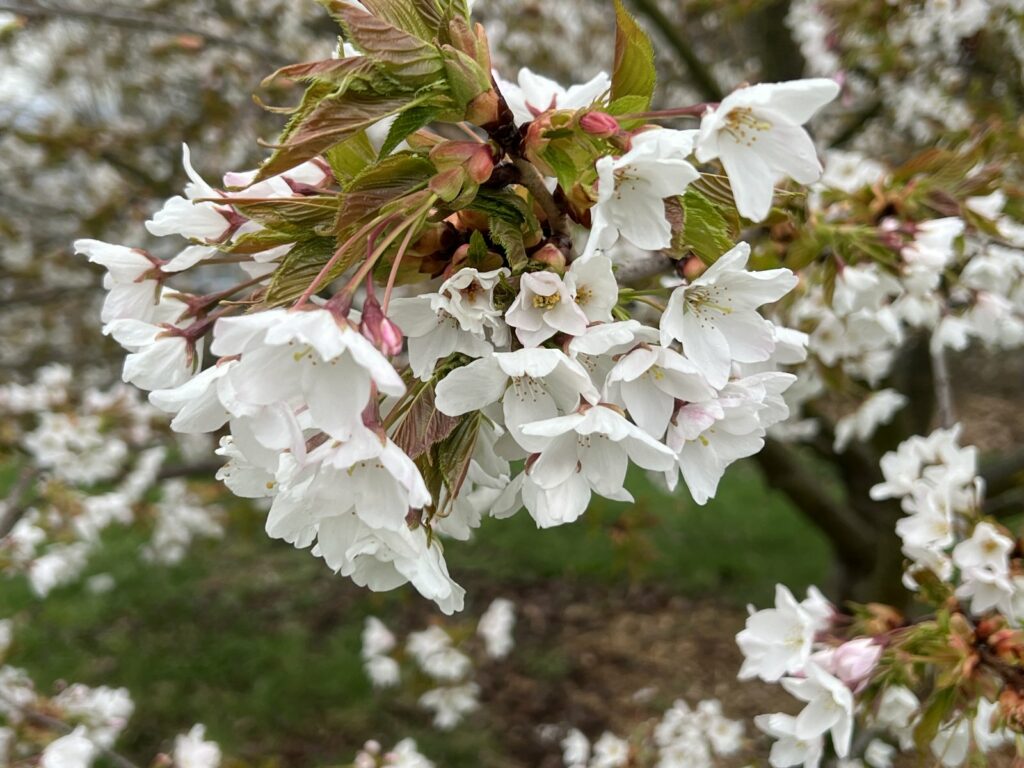
20240322 UBCBG Surugadai-nioi Willard IMG_8937

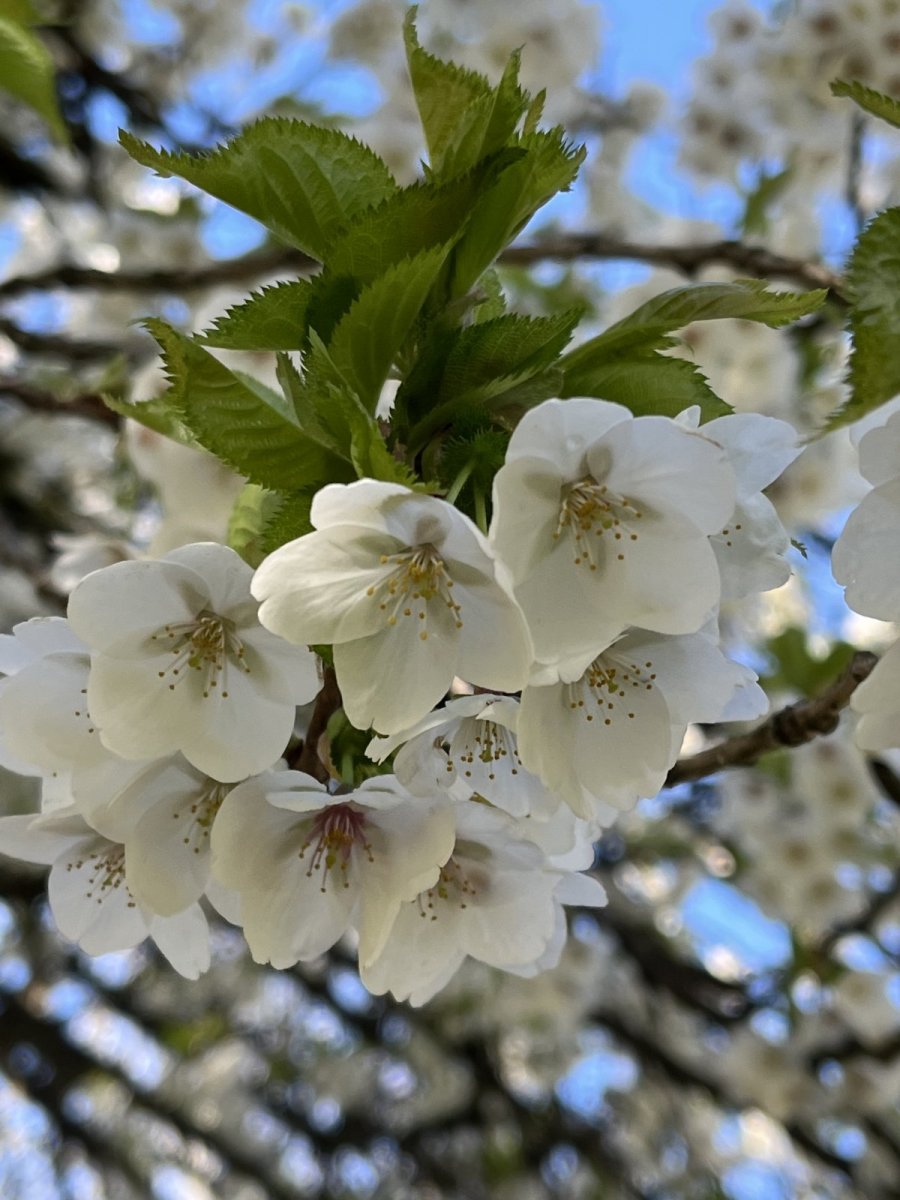
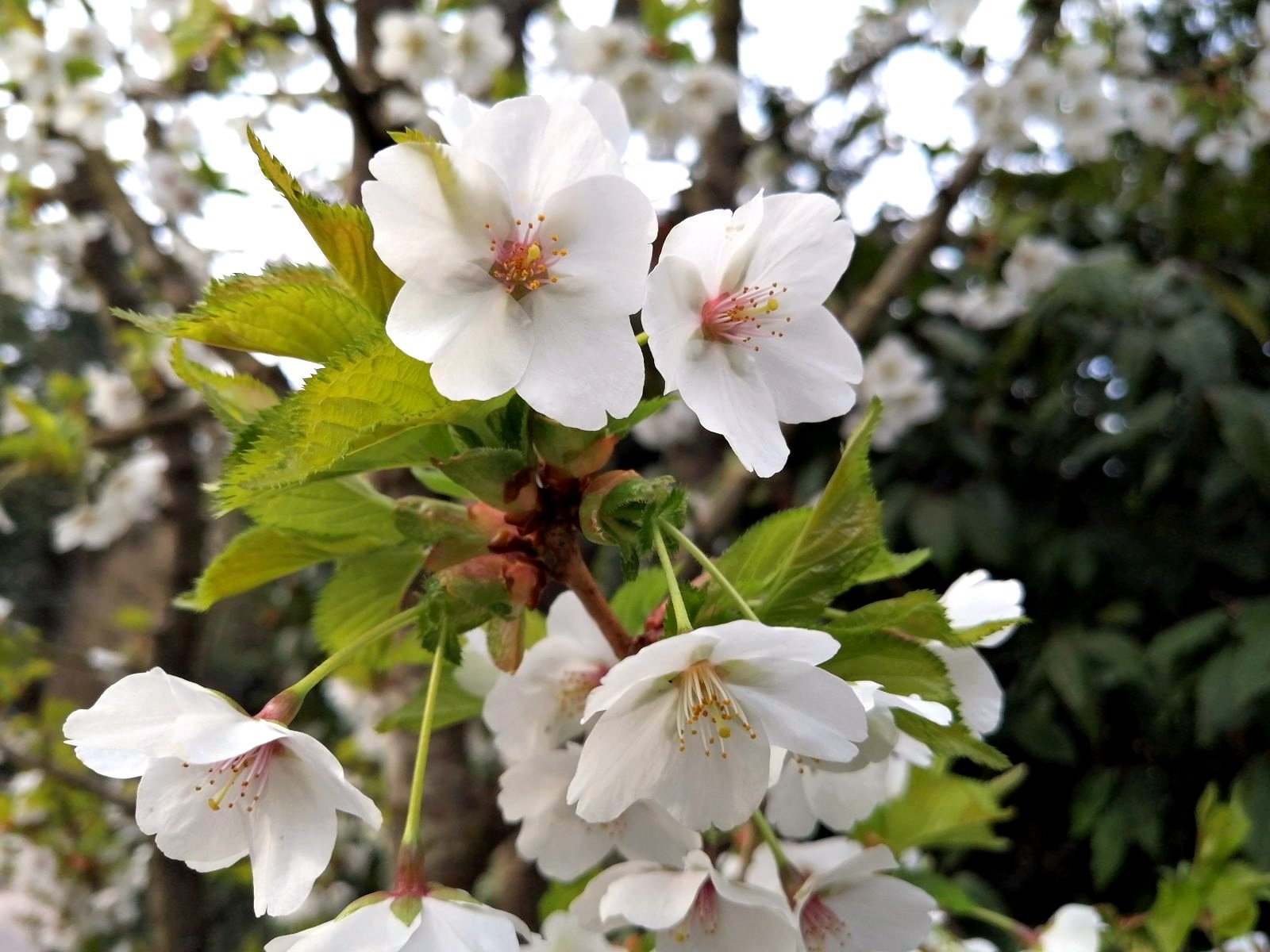
‘Umineko’ are usually older trees than ‘Snow Goose’ but their parents are the same and they look identical. The young ones that come in labelled ‘Snow Goose’ get that name. Note the round overlapping petals that result in fat stars in the centres. Young trees are distinctively narrow and upright. Here are
20240329_Umineko_QEParkDuckPond_Eng_0027
20240325 Snow-Goose_Cedarhurst&MarineDr_Taka7
Categories
Photos Vancouver Cherry Blossom Festival

Yesterday’s news – pink cascades

April 12, 2023. Pink blossoms today, on weeping cherry trees. “Shidare” (drooping) in Japanese cherry blossom names is used to describe the tree form called “weeping” in English.

So, ‘Beni-shidare’ can be described as the Red Cascade, which is much more poetic than Red Weepings and more in line with how Taki-zakura was named, the Waterfall Cherry of Miharu that is a 1,000 year-old ‘Beni-shidare.’ Certainly none of Miharu’s visitors would think of weeping.

Here are ‘Beni-shidare’ flowers, single blossoms (five petals).

20230411_BeniShidare_E35Culloden_Eng_7641

Where this large tree is located on East Culloden Street in Vancouver, right next to it, and of similar size, is a ‘Yae-beni-shidare’, with double pink flowers – “yae” refers to the double flowers.

20230411_YaeBShidare_E35Culloden_Eng_7642
20230411_Yae-beni-shidare_E35Culloden_Eng_7642
Categories
Uncategorized

Yesterday’s news – ‘Afterglow’

April 9, 2023. It was several years before our Cherry Scouts found ‘Afterglow’ trees. They were all listed as ‘Akebono’, and indeed they are a different cultivar of the same Prunus yedoensis species, and they bloom at roughly the same time. They have a similar habit (shape), but the flowers are smaller and much more pink. The petals are round enough to overlap. Thanks to Anne Eng for this photo.

20230407_Afterglow_ElginE27_Eng_7604
Categories
Photos

Yesterday’s news – pendulous (weeping) trees, pink and white

April 3, 2023. In the previous posting, we have featured single white blossoms that can be seen around town now, or coming soon. You can find the most recent posting at Yesterday’s news – single white flowers – Vancouver Cherry Blossom Festival (vcbf.ca). Today we feature two similar weeping trees, one a white one not shown yesterday, and the other the same species but a pink cultivar that we have featured here before. Thanks to Shirley Willard for both photos.

Both these trees with a pendulous (weeping) shape have the botanical name Prunus itosakura Pendula Group. This does not seem to be a registered cultivar, so we are calling it ito-zakura, meaning thread cherry, as it is known in Japan. It is not all that common in the wild, but it is available from landscaping suppliers in white or light pink.

20230331 MedusaWOceanview Ito-zakura Willard IMG_1548

Much more widely planted is the Prunus itosakura cultivar ‘Beni-shidare’, also called ‘Pendula Rosea’, with its showy deep-pink flowers.

20230401 SylvanDrECherylAnnParRd Beni-shidare Willard IMG_1625
Categories
Cherry Scouts Photos

Blooming Now: a visual timeline for cherry blossom viewing in Vancouver

This visual timeline features the estimated blooming period for ten of the most common cultivars of cherry trees in Vancouver: Whitcomb, Beni-Shidare, Accolade, Akebono, Umineko / Snow Goose,  Shirotae, Shirofugen, Kanzan, Kiku-shidare-zakura, Shogetsu.

Happy cherry blossom viewing!

(Click the image to expand the timeline)

Timeline_2020_Vancouver_Cherry_Blossoms_Tremblay
Timeline of Vancouver Cherry Blossoms blooming date for 2020. Photos by Jessica Tremblay, dates from https://www.vcbf.ca/neighbourhood-maps


Categories
Cherry Scouts Photos

Early Bloomers

Vancouver Whitcomb cherry trees at Nicola park

“The three straggly ‘Whitcomb’ at Nicola Mini-Park are also showing signs of pink. ” – (Willard)

When this posting went up on the VCBF Neighbourhood Blogs forum on January 12, I felt a shiver of excitement down my spine: “Cherry blossom season has begun!”

The Whitcomb cherry trees at Nicola Park are one of the first cherry trees to bloom in Vancouver. When their tiny, deep pink cherry blossoms are open, it officially marks the start of our “pink wave” here in Vancouver (a pink wave that will reach its peak during the Vancouver Cherry Blossom Festival in April).

20190202_nicolapendrell_whitcomb_tremblayimg_9212

Whitcomb cherry blossoms are blooming mid-February to mid-March.  They purple pink flowers are small and photogenic.  Use the Neighbourhood Maps to locate a Whitcomb tree near you, grab your camera, and rejoice: Vancouver cherry blossom viewing has begun!

[Photos: Jessica Tremblay]